Author:

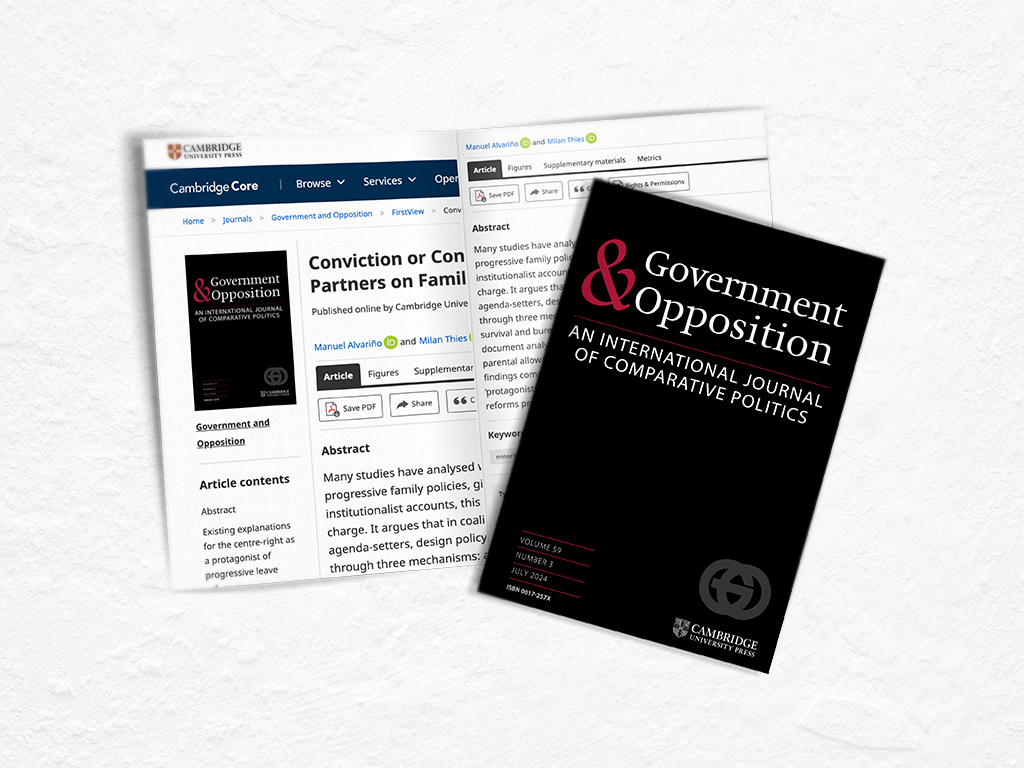
Why do some center-right governments adopt progressive social investment family policies that diverge from their traditional stances? Previous research often focuses on strategic motives within these parties, such as electoral or economic concerns. Offering an original perspective, WellSIRE member Manuel Alvariño and EUI researcher Milan Thies argue in their newly published article in Government and Opposition that coalition partners may be the real drivers behind these unexpected reforms. This shifts the focus from the party formally in power to the hidden political bargains within inter-party negotiations.
The study re-examines the attribution of two prominent reforms, using deductive process tracing, a rigorous qualitative method, to question whether Germany’s CDU and Spain’s PP introduced these reforms out of strategic intent or under pressure from coalition allies. The findings indicate the latter. Coalition partners leveraged government formation agreements, conditions for maintaining stability, and bureaucratic continuity to push forward progressive policies. The cases analyzed include Germany’s parental leave reform, which shortened and increased leave pay, promoting female employment, and Spain’s expansion of paternity leave, enhancing gender balance in work-family responsibilities.
The results suggest that social investment reforms in coalition settings often stem from compromises and negotiations rather than shifts in party ideologies or platforms. More broadly, the study underscores the complexity of reform attribution in non-majoritarian governments where multiple actors are involved, only fully revealed through detailed case research.
Read More about the article here: Alvariño, M., & Thies, M. (2024). Conviction or Consent? Tracing the Influence of Coalition Partners on Family Policy under Centre-Right Ministers. Government and Opposition, 1-22.