Author:

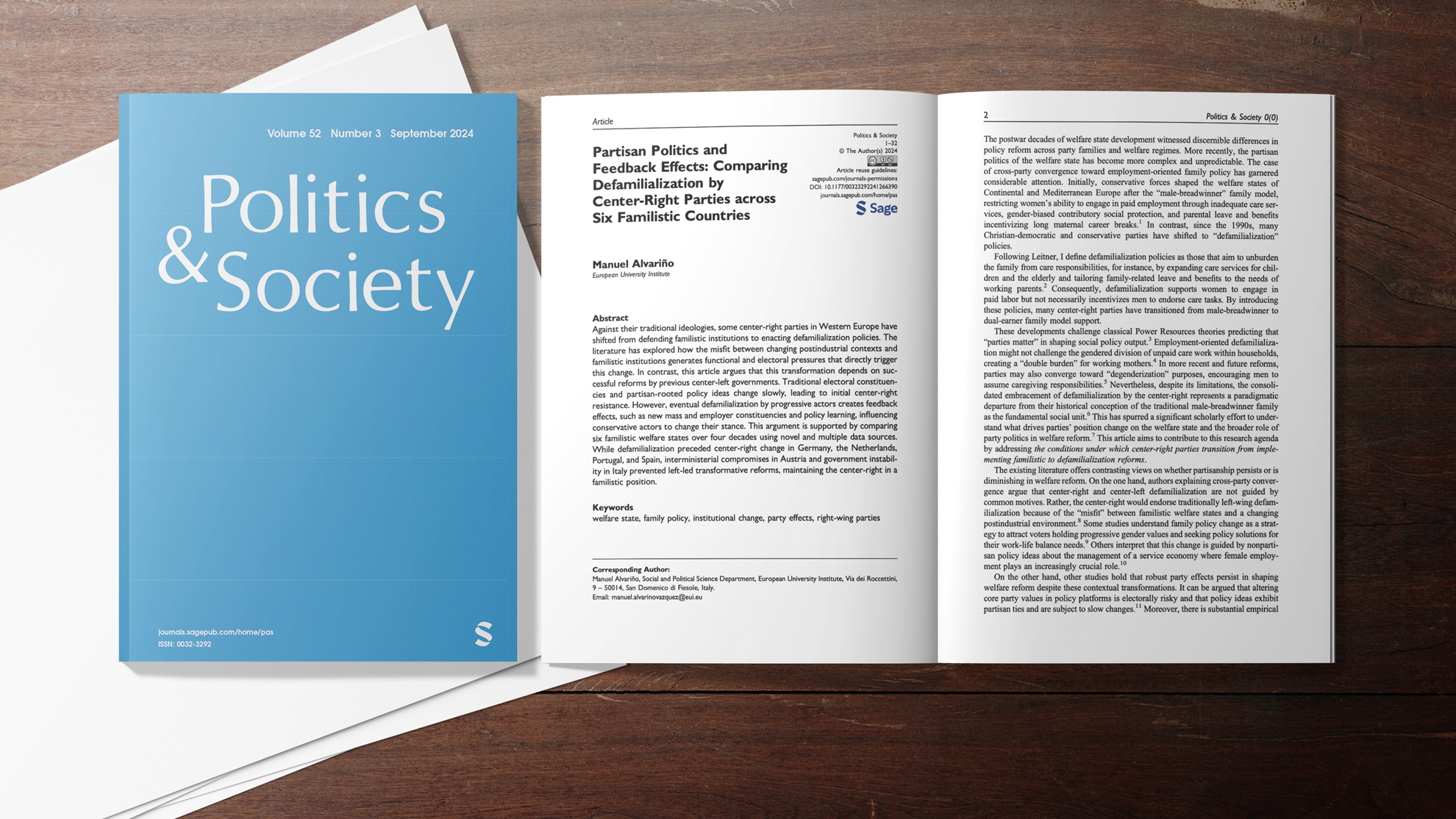
Why do some center-right parties, traditionally defenders of familistic welfare models, shift to favor defamilialization policies? In a new WellSIRE article, Manuel Alvariño argues that this change is not simply a reaction to immediate social or electoral pressures. Rather, the groundwork is laid by successful reforms from earlier center-left governments, which create new constituencies and opportunities for policy learning. Post-industrial transformations give a window of opportunity for the left to push for progressive policies in the family and gender realms. Over time, these produce feedback effects which pushes conservative actors to abandon their opposition to defamilialization. By analyzing the biggest six Continental and Mediterranean countries over the past four decades, the study uncovers how previous progressive reforms triggered gradual shifts in center-right policies, except in Austria and Italy, where internal political barriers maintained the status quo.
A key takeaway is the novel understanding of how and when political parties matter in welfare state change. Resistance to postindustrial shifts may initially be strong, but once reforms are underway, they create momentum that is hard to reverse. In the case of the family, moving away from the male breadwinner model marks a critical step, and further progress appears more likely than regression.
Read More about the article here
Alvariño, M. (2024). Partisan Politics and Feedback Effects: Comparing Defamilialization by Center-Right Parties across Six Familistic Countries. Politics & Society, 0(0). https://doi.org/10.1177/00323292241266390